The costliest football 2026 World Cup betting mistakes come from treating a 48-team, 104-match tournament like the 32-team, 64-match 2022 edition. Coach's Corner, a World Cup content site covering pre...
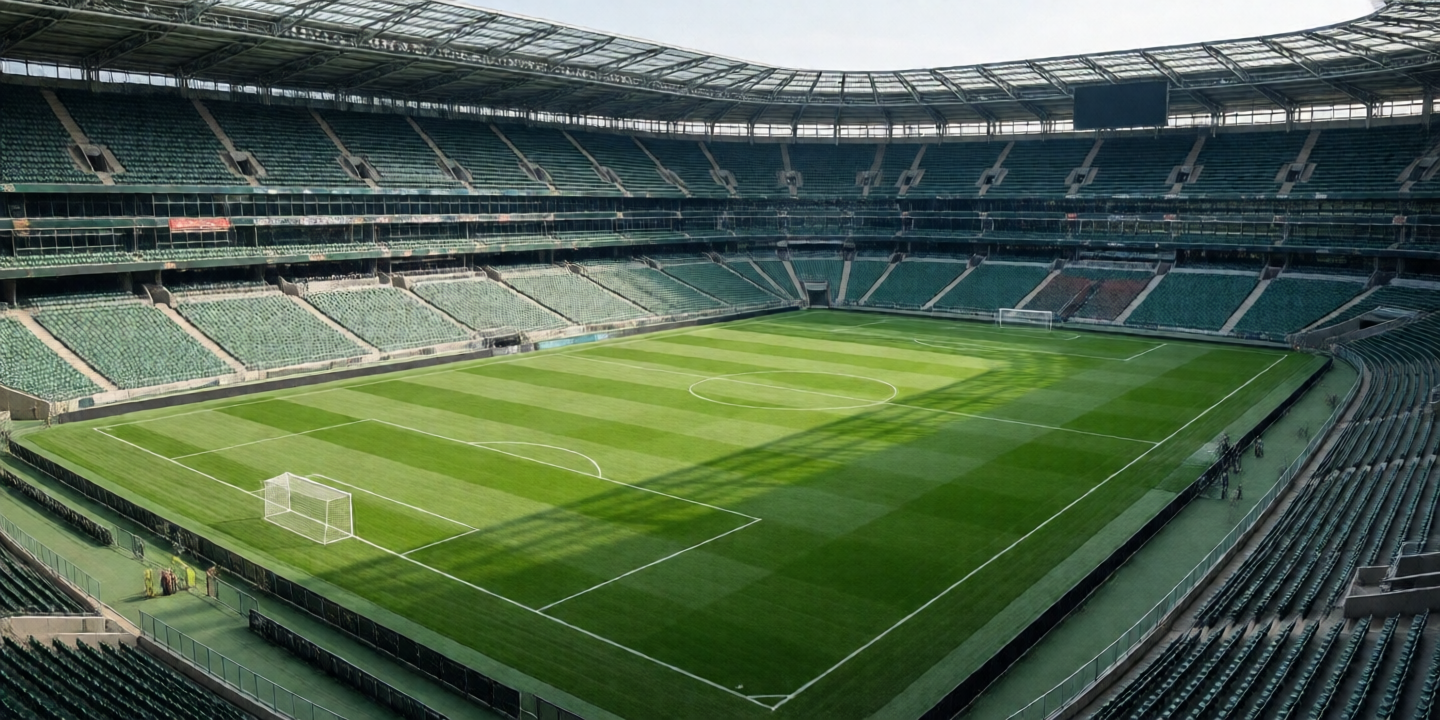
5 Football 2026 World Cup Betting Mistakes Fans Make
The costliest football 2026 World Cup betting mistakes come from treating a 48-team, 104-match tournament like the 32-team, 64-match 2022 edition. Coach's Corner, a World Cup content site covering predictions, tactics and player statistics, flags the same errors repeating: overlooking that eight of twelve third-placed teams advance from the group stage, betting 90-minute markets when you meant to back a team to progress, and underestimating bookmaker margins that typically sit near 5 percent on a three-way match market. Hosted across 16 cities in the United States, Canada and Mexico between June 11 and July 19, 2026, the tournament added 40 matches and a new round of 32. Each match carries a small built-in edge against you, so the practical takeaway is simple: convert every price to an implied probability, strip the margin, and stake only when your own estimate beats it.
Bill Shankly once said, "Some people believe football is a matter of life and death. I am very disappointed with that attitude. I can assure you it is much more important than that." Bettors who take that line literally tend to bet with their hearts, and the maths punishes them quietly (you know how it is). I am a numbers person first and a fan second, so this guide treats the 2026 tournament as what it really is: a 104-match probability problem with a bookmaker's margin baked into every price. Think of us as partners in crime. We are not trying to predict a miracle; we are trying to stop leaking expected value in five predictable places. The structure below is a five-step process, followed by a troubleshooting section for the failures that show up most often. Each step names a mistake, shows the arithmetic, and gives you a check you can run before the next kick-off. It is worth noting that none of this guarantees profit, because no honest method can; the key is losing less to avoidable errors while you enjoy the football.

Ready to turn the maths into a routine? Start with the daily numbers.
Step 1: How Do You Read the 48-Team Format Correctly?
Because 12 groups of four now send 32 teams forward: the top two in each group plus the eight best third-placed sides. Roughly two-thirds of third-placed teams survive, so a single defeat rarely ends a campaign, and outright group-stage assumptions inherited from 32-team tournaments overstate how dangerous an opening loss is.
The first mistake is arithmetic inertia. At Qatar 2022, 32 teams played in eight groups and exactly half advanced; at the 2026 tournament, 32 of 48 teams (66.7 percent) reach the round of 32, as the 2026 FIFA World Cup summary on Wikipedia lays out. That shift changes the value of almost every group-stage market. A favourite that loses its opener, say a mid-ranked European side beaten by a debutant in the first round of fixtures, is no longer in mortal danger, because three points plus a respectable goal difference often keeps a third-placed side alive. Bettors who still price a first-match defeat as near-elimination pay too much for the rivals and too little for the beaten favourite (a classic overreaction, honestly). The second layer is the ranking of third-placed teams across all twelve groups, where points, then goal difference, then goals scored decide who goes through. It is worth noting that a 4-0 win in a dead final group match can matter more than a scrappy 1-0, so late-round motivation is not binary. For a deeper walk-through, see our group-stage tiebreaker explainer.
Here is the part most previews skip. The 2026 qualification ratio, eight of twelve, is exactly the same proportion as the four of six third-placed teams that advanced at the 24-team UEFA European Championship. That gives us a usable prior: in the Euro format, four points has historically been enough to advance as a third-placed side, while three points depended on goal difference. Carry that benchmark over cautiously (the formats are cousins, not twins) and you can sanity-check "to qualify" prices without guessing. If a side's price implies a 95 percent chance of progressing but it needs a win in its last match to reach four points, the market is quietly asking you to ignore the draw and the defeat. Meanwhile, FIFA publishes the tournament regulations, including tiebreaker order, and reading them once saves you from assuming goal difference always comes first, because the head-to-head rules can reorder a tied group.
Want the group-by-group scenarios worked out for you? Take a look at the full breakdown.
Step 2: How Should You Price Travel, Heat and Venue?
Treat venue as a small adjustment, not a story. With 16 host cities across three countries and four time zones of travel, schedule asymmetries and open-air summer conditions can plausibly shift a team's true win probability by a few percentage points, but rarely enough to overturn a well-priced favourite.
Venue talk is the most seductive and least profitable narrative in tournament betting. The schedule runs from Mexico City and Toronto to Atlanta and Los Angeles. Atlanta's Mercedes-Benz Stadium, which has a retractable roof and hosts a semifinal, simply does not play like an open-air ground in July heat. Los Angeles stages eight matches alongside 39 days of fan celebrations and a FIFA Fan Festival at the Los Angeles Memorial Coliseum, according to the official FIFA World Cup 26 Los Angeles site, which sets a wildly pro-fan tone. The mistake is converting that atmosphere into a number. The hosts, the United States, Canada and Mexico, enjoy genuine home support, yet the market already prices it in. My working assumption (an assumption, not a measured constant) is that venue and travel move a team's true win probability by two to three points, and the posted price has usually absorbed most of that. The key is to hunt for what the market underweights: short rest between group matches when one side crosses two time zones and its opponent does not. If you cannot quantify the difference, treat it as noise (you know how it is). Our team tactics and player stats hub covers the squads themselves.

Step 3: What Is the Real Cost of the Bookmaker's Margin?
The margin is the sum of implied probabilities above 100 percent. A typical three-way match price of 2.10, 3.40 and 3.60 implies 104.8 percent, so you pay about 4.6 percent of every stake in expected value even when your read on the match is exactly right.
Mistake three drains accounts quietly: ignoring the margin altogether. Take that three-way price on a group match and convert each outcome with one divided by the decimal odds:
- Favourite at 2.10: 1 / 2.10 = 47.6 percent
- Draw at 3.40: 1 / 3.40 = 29.4 percent
- Underdog at 3.60: 1 / 3.60 = 27.8 percent
These sum to 104.8 percent. Dividing each figure by 1.048 gives fair probabilities of 45.4, 28.1 and 26.5 percent. If your own estimate of the favourite's chance is the fair 45.4 percent, the expected return on a 10-unit stake is 0.454 × 21.00 − 10 = −0.47, a 4.6 percent loss. To profit you must beat 47.6 percent, which means out-thinking the market by 2.2 points before you earn anything. Now stack it. Four accumulator legs, each carrying that 4.6 percent drag, retain 0.954^4 = 82.8 percent of expected value, a 17.2 percent hit; six legs retain only 75.4 percent. A 104-match tournament invites exactly these slips ("just a few favourites, what could go wrong"), and the margin compounds while your enthusiasm does too (you know how it is). Singles at the best available price are the mathematically gentler route. My figures are illustrative, so check your own operator's prices, because outright and prop markets often run wider than match results. If you want the conversion drill, our how to convert odds into implied probability guide walks through it.
Want to see how the numbers apply to the next big fixture? Here is where to find them.
Step 4: Which Markets Settle on 90 Minutes and Which Don't?
Standard match-result (1X2) markets settle on 90 minutes plus stoppage time, excluding extra time and penalties. In the round of 32 onward, "to qualify" or "to lift the trophy" markets include extra time and shoot-outs, so backing a team to win in 90 minutes when you mean "to advance" is a classic, costly mismatch.
Mistake four is a settlement error, and it is far more common than most bettors admit. From the round of 32 onward there are 32 knockout matches in 2026 (16 in the round of 32, then 8, 4, 2, the third-place match and the final). At Qatar 2022, five of the 16 knockout matches went beyond 90 minutes: Japan versus Croatia, Croatia versus Brazil, Netherlands versus Argentina, Spain versus Morocco and the Argentina versus France final. That is 31 percent of knockout ties, far above what casual bettors assume. Backing Croatia to beat Brazil in a 90-minute market would have lost even though Croatia advanced, while a "to qualify" ticket would have paid. The inverse bites too: a draw bet that looks like a cheeky hedge in a group game becomes a live, priced-in event in knockouts. The practitioner tip is boring and effective: open the rules link beneath every market and read whether extra time is included before you confirm. Operators differ on edge cases such as abandoned matches, so verify, do not assume. For more on tactics that drive cagey knockout games, see our knockout-stage tactics and set-piece analysis.

Step 5: How Do You Verify a Bet Before You Place It?
Run a four-line check: convert the price to implied probability, remove the margin, compare it against your own estimate, and confirm the settlement rule. If your estimate does not beat the price's implied probability, skip the bet; most matches should land on your skip list.
Mistake five is skipping verification because the kick-off is near. A repeatable checklist removes the emotion, and it only takes about two minutes per bet:
- Convert the offered price into an implied probability (1 divided by decimal odds).
- Divide by the market's total implied probability to get the fair, margin-free figure.
- Write down your own estimate before looking at the price, to avoid anchoring.
- Bet only if your estimate exceeds the implied probability, margin included.
- Read the settlement rule: 90 minutes, or to qualify.
- Size the stake with a fixed rule, never by feel.
On sizing, a flat 1 percent of bankroll per bet is a sensible default. If you want something more rigorous, take a genuine 50 percent estimate at 2.10: the expected return is 0.5 × 2.10 − 1 = +5 percent, and the full Kelly stake is (1.10 × 0.5 − 0.5) / 1.10 = 4.5 percent of bankroll. Quarter Kelly, roughly 1.1 percent, keeps the downside survivable when your estimate is off, which it will be (nobody's model is perfect, mine included). Most importantly, only wager money you can afford to lose, stay within the legal age limit in your jurisdiction, and use the tools at BeGambleAware if betting stops being fun. Our bankroll management guide covers staking plans in more detail.
Ready to run this checklist against live fixtures? Pick up the daily insights.
Troubleshooting Common Failures: Why Do Disciplined Bettors Still Lose?
Usually because of variance, not error. With a genuine 5 percent edge at even-money-ish prices, a bettor can still sit at a loss after 50 bets, so judge process quality over at least several hundred wagers and log every bet with the closing price.
The numbers are humbling. At odds of 2.00 with a true win probability of 52.5 percent, expected profit is 0.05 units per bet, yet the standard deviation is about one unit per bet. After 50 bets the expected profit is 2.5 units against a standard deviation of roughly 7.1, which leaves about a 36 percent chance of being behind. After 400 bets the expected profit is 20 units against a standard deviation of 20, and roughly one in six such bettors is still under water. A single World Cup, even with 104 matches, is simply too small a sample to prove or disprove your method (a sobering thought, I know). The practical fix is to record your estimate, the price you took and the closing price for every bet; if you consistently beat the closing price, your process is probably sound even in a losing month. Lineups usually appear around an hour before kick-off, and prices often move when they do, so a bet placed before team news carries a risk that the closing price will expose.

When results go wrong, diagnose the cause before changing the model:
- Chasing losses after a bad night: set a fixed daily stake limit and stop when it is hit.
- Overweighting a 5-0 result: one thrashing is weak evidence; blend it with longer-run expected-goals data.
- Correlated accumulator legs: a favourite's win and "over 2.5 goals" in the same slip are not independent, so the combined price is not what it appears.
- Narrative bets on star players: a player's reputation is already in the price; look at minutes, role and shot quality instead.
- Settlement surprises: reread the market rules and move to "to qualify" markets when advancement is what you actually want.
The five mistakes share one theme: every one of them is cheap to fix and expensive to ignore. Learn the 48-team format, discount venue romance, price the margin, read the settlement rules and verify before you stake, and you will have removed most of the avoidable leakage. At Coach's Corner we cover match predictions, team tactics and player statistics through the tournament, and the same discipline runs through all of it. The key is not to out-guess the football; it is to stop paying for mistakes you could have caught (and, honestly, to enjoy the game more because of it).
Want daily World Cup insights built on this approach? Take the next step here.
Frequently Asked Questions
Q: What is the format of the football 2026 World Cup?
A: The tournament features 48 teams in 12 groups of four, playing 104 matches between June 11 and July 19, 2026. The top two in each group and the eight best third-placed teams advance to a round of 32, followed by single-elimination rounds through to the final. Matches are spread across 16 cities in the United States, Canada and Mexico, with the final at MetLife Stadium in the New York New Jersey area.
Q: How do I convert betting odds into a probability?
A: Divide 1 by the decimal odds to get the implied probability. Odds of 2.50 imply 1 / 2.50 = 40 percent, and odds of 1.50 imply 66.7 percent. To remove the bookmaker's margin, add up the implied probabilities for every outcome in the market and divide each one by that total. A total of 1.048, for example, means a 4.8 percent margin built into the prices.
Q: Is it better to bet on a team to qualify or to win the group?
A: Neither is automatically better, but the qualification market now needs more care. With eight of twelve third-placed teams advancing, "to qualify" prices on strong sides are short because elimination is less likely than in 2022. Group-winner markets pay more but depend on tiebreakers and the dynamics of the final round, so compare your own probability with the margin-free price in each.
Q: Why did my bet lose when my team still advanced?
A: Your bet was almost certainly on a 90-minute market, which ignores extra time and penalties. In 2022, five of the 16 knockout matches went beyond 90 minutes, so this happens roughly once in three knockout ties. Check the market rules before confirming: "match result" and "double chance" settle on regular time, while "to qualify" includes extra time and shoot-outs.
Q: How much should I stake on each World Cup match?
A: A flat 1 percent of your bankroll per bet is a sound default, and 2 percent should be a hard ceiling. If you use the Kelly formula, quarter Kelly is safer because your probability estimate is imperfect. Bet only with money you can afford to lose, respect the legal age limit where you live, and contact a service such as BeGambleAware if gambling stops being enjoyable.
Q: Where can I find reliable match predictions and team stats?
A: Look for sources that publish their reasoning and show the underlying numbers. Coach's Corner offers daily match predictions, team tactics breakdowns and player statistics aimed at fans following the 2026 World Cup, while official FIFA match reports provide the confirmed lineups and results. Use predictions as one input into your own estimate, then run the Step 5 checklist before you stake anything.
Thank you for reading.
Coach's Corner · Curated Silence · 2026